Iran’s Missile Firepower Has Almost Run Out
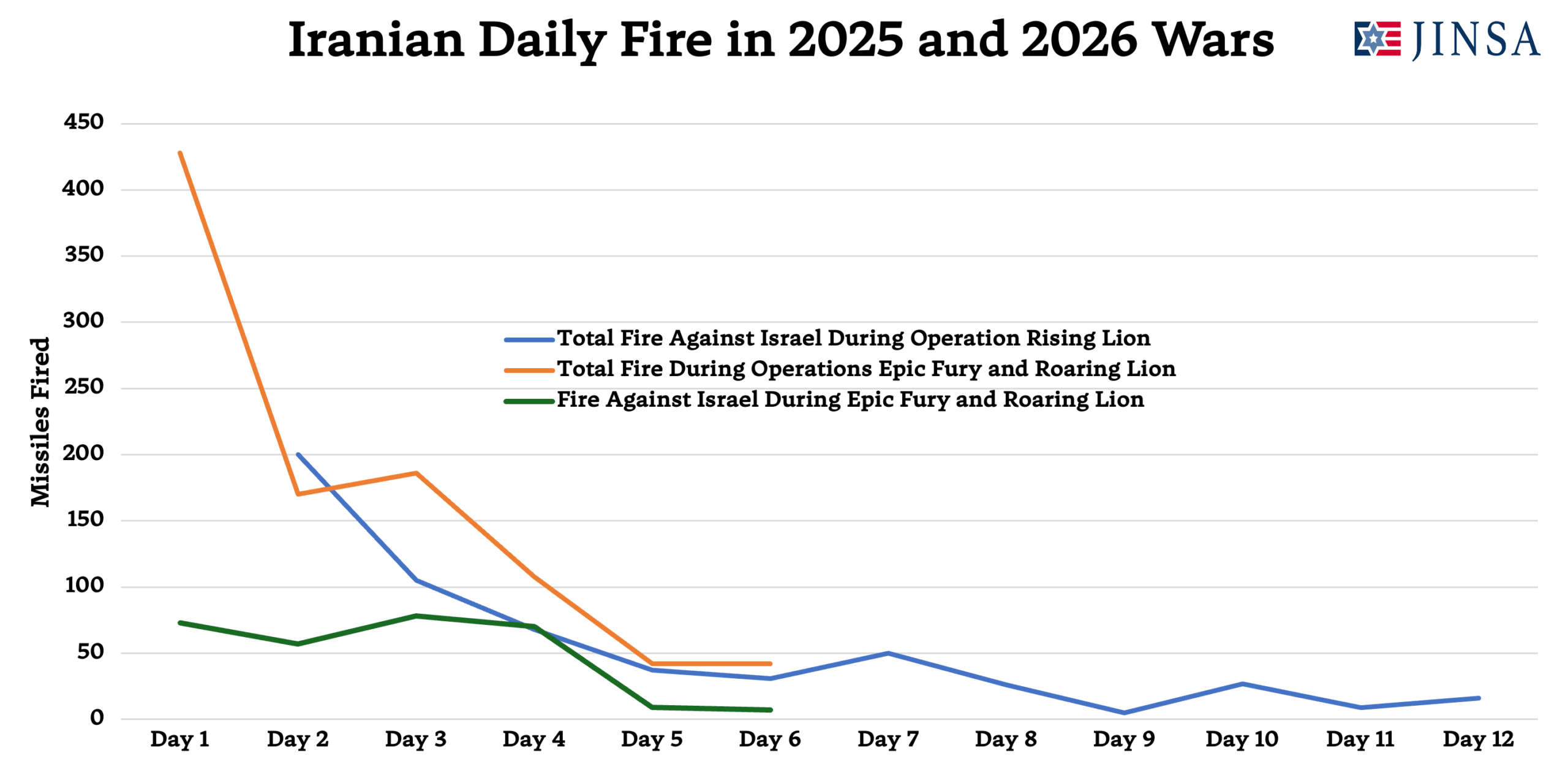
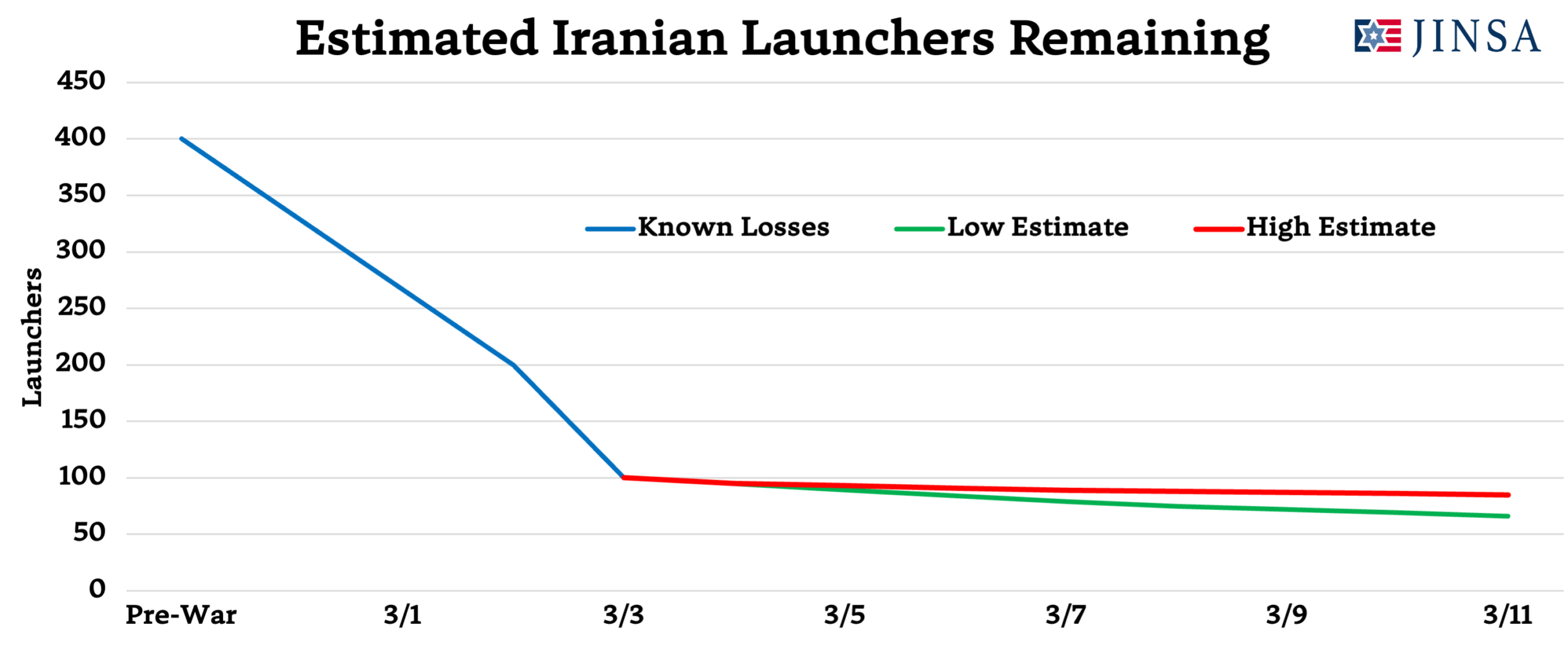
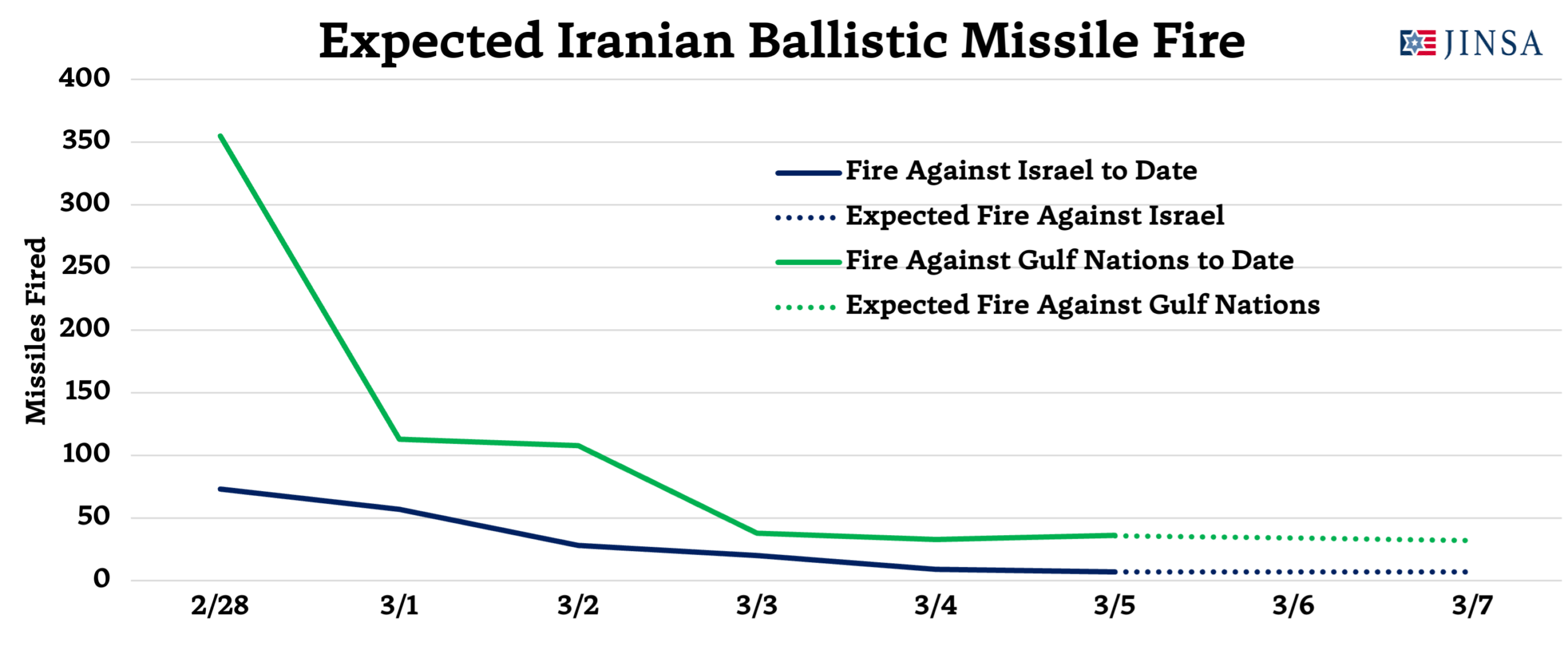
Iran’s ballistic missile arsenal, which it spent decades building into the core of its military power, fell apart in only a few days of U.S. and Israeli strikes. U.S. Operation Epic Fury and Israeli Operation Roaring Lion reduced Iran’s total daily ballistic missile fire roughly 3 times faster than in June 2025. Iranian ballistic missile launches have fallen 90 percent since the start of the current war, including an 88 percent drop against Israel, compared to an 82 percent decrease over the first five days of Operation Rising Lion. Iran fired more missiles during the first day of Operation Rising Lion than it did during the first five days of the current war combined.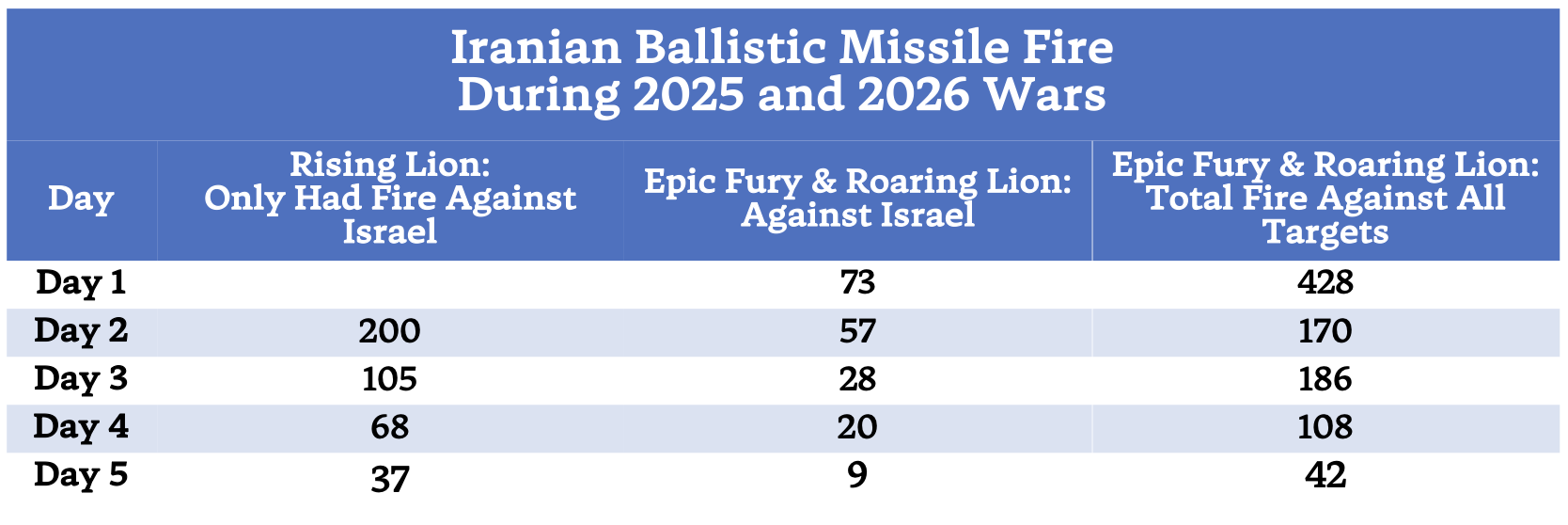 During the 12-Day War, Iran initially relied on launching large-scale missile barrages as a core element of its offensive strategy. However, as the conflict progressed and launcher losses increased, Iran shifted from these massed attacks to more limited strikes. This shift has become even more pronounced in the current war. With U.S. and Israeli forces rapidly destroying roughly 75 percent of Iran’s launch capacity, the regime can no longer conduct sustained, large-volume barrages. Iran can still mount limited missile attacks, but each attack burns through its remaining launcher force and forces even smaller follow-on attacks. Even as launchers remain the main bottleneck in Iranian fire, its missile stockpile losses compound the decline.
As Iran continues to lose the war, the regime will likely rely on small, infrequent missile attacks and struggle to sustain higher daily launch volumes against Israel and the Arab Gulf nations. Iran could gamble on a one-time barrage that burns down its remaining launch capacity, but it will more likely turn to low-volume missile fire backed by drones and proxy attacks.
Faster Fire Than the 12-Day War but Rapid Decline
In the current war, Iran responded with ballistic missiles much faster after the war began and in far greater numbers than after Israel began Operation Rising Lion. Iran launched barrages of ballistic missiles on the opening day of the current war—unlike in June 2025 when it initially only responded with drones and did not fire missiles for eighteen hours. However, Operations Epic Fury and Roaring Lion drove Iranian missile fire down, in particular against Israel, much faster than Operation Rising Lion.
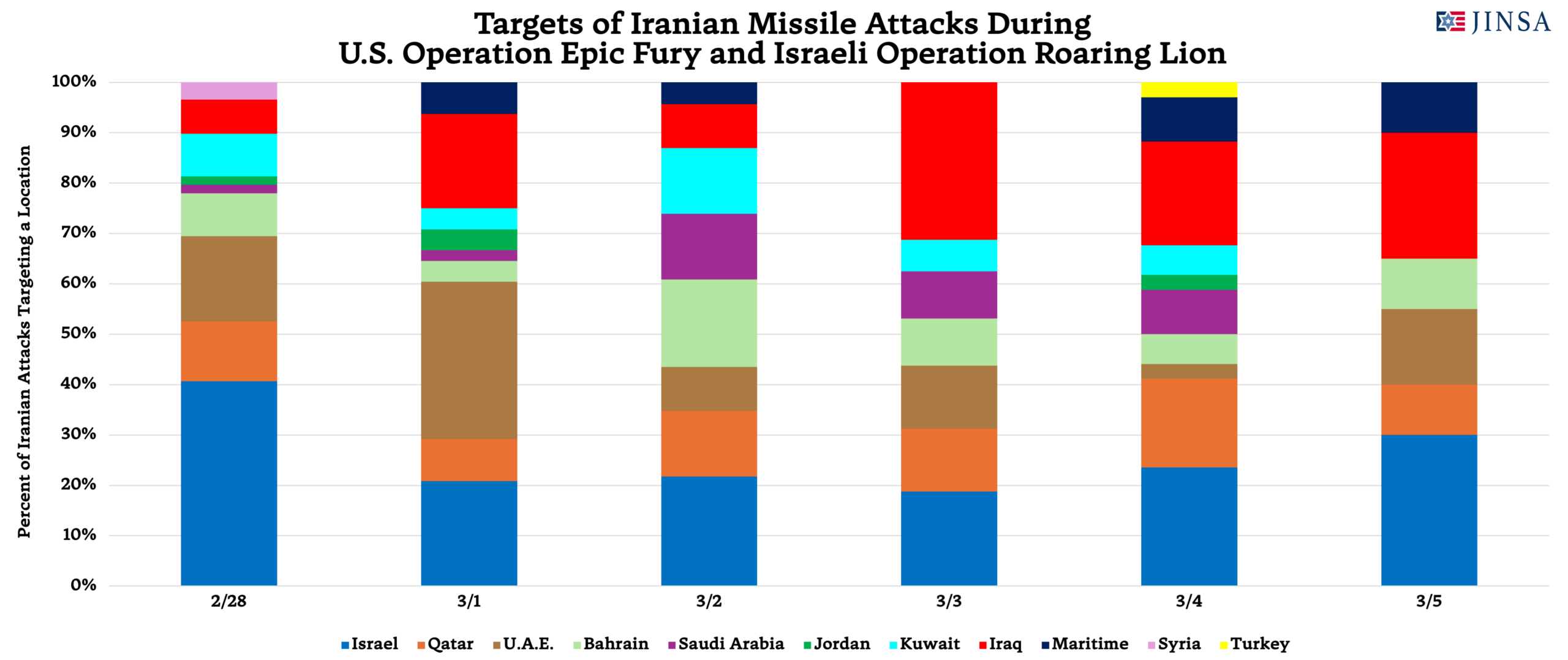
Alongside Iran’s large missile fire on the first day of the current war, it also spread these attacks across regional targets rather than concentrating them on Israel. By spreading its effort, Iran reduced the burden on Israel and signaled a wider strategy that targeted other U.S. allies in the region. The mix of targets also requires different missile use, with longer-range systems for targeting Israel and shorter-range systems for striking Gulf states.
Launcher Losses Remain the Firing Bottleneck
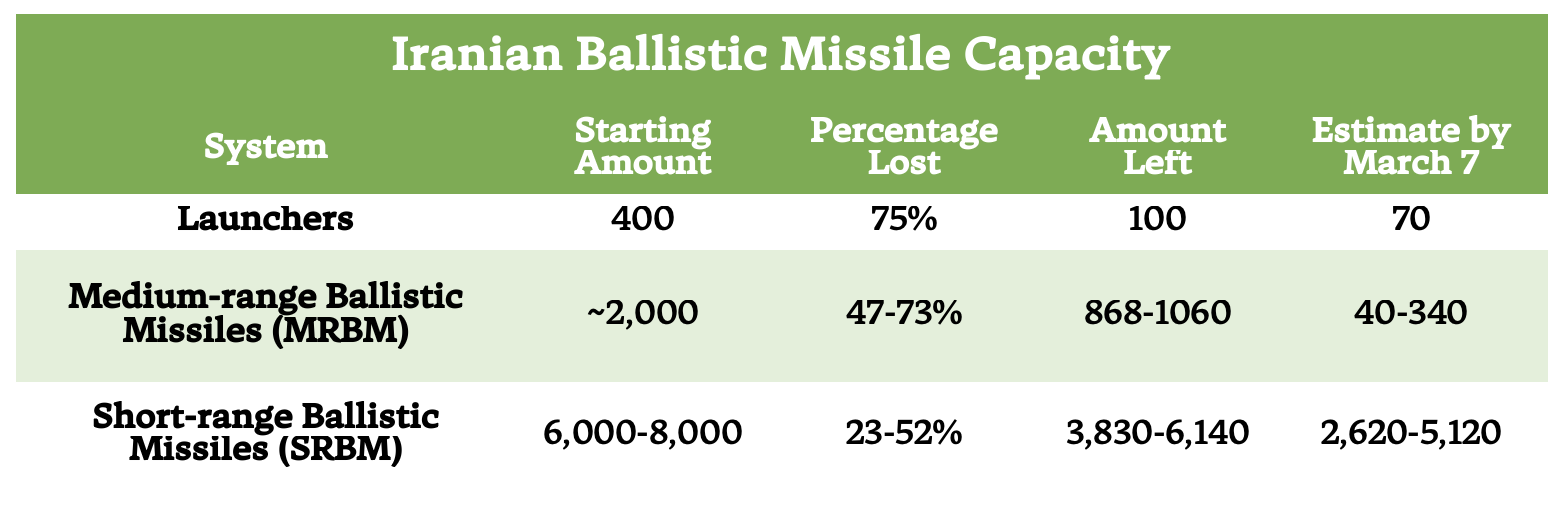
Like during the 12-Day War, launcher losses have again limited how many ballistic missiles Iran can fire each day because launchers have become the scarcest link in its missile launch chain. In the current war, Iran has lost roughly 75 percent of its launcher force in a short period, rapidly constraining its ability to continue conducting missile attacks. As a result, Iran has moved from firing larger waves to firing fewer missiles per attack and has stretched the time between launches. Every time that Iran launches, U.S. and Israeli forces have more chances to spot and strike the remaining launchers.
Iranian launchers have degraded much faster in Epic Fury and Roaring Lion than in Operation Rising Lion. In the earlier war, launcher attrition was significant but more gradual, allowing Iran to maintain higher daily fire for longer before shifting to smaller attacks. In the current war, launcher losses accumulated quickly enough to compress that transition into just a few days.
If Iran keeps firing, it will continue to lose its remaining launchers more quickly. If it slows its fire, it may preserve some launch capacity by making launchers harder to find, but doing so would sharply reduce its ability to influence the course of the war. Either way, the regime faces a tightening tradeoff between exerting short-term pressure and preserving the means to keep firing.
Missile Arsenal Losses Create Logistical Challenges
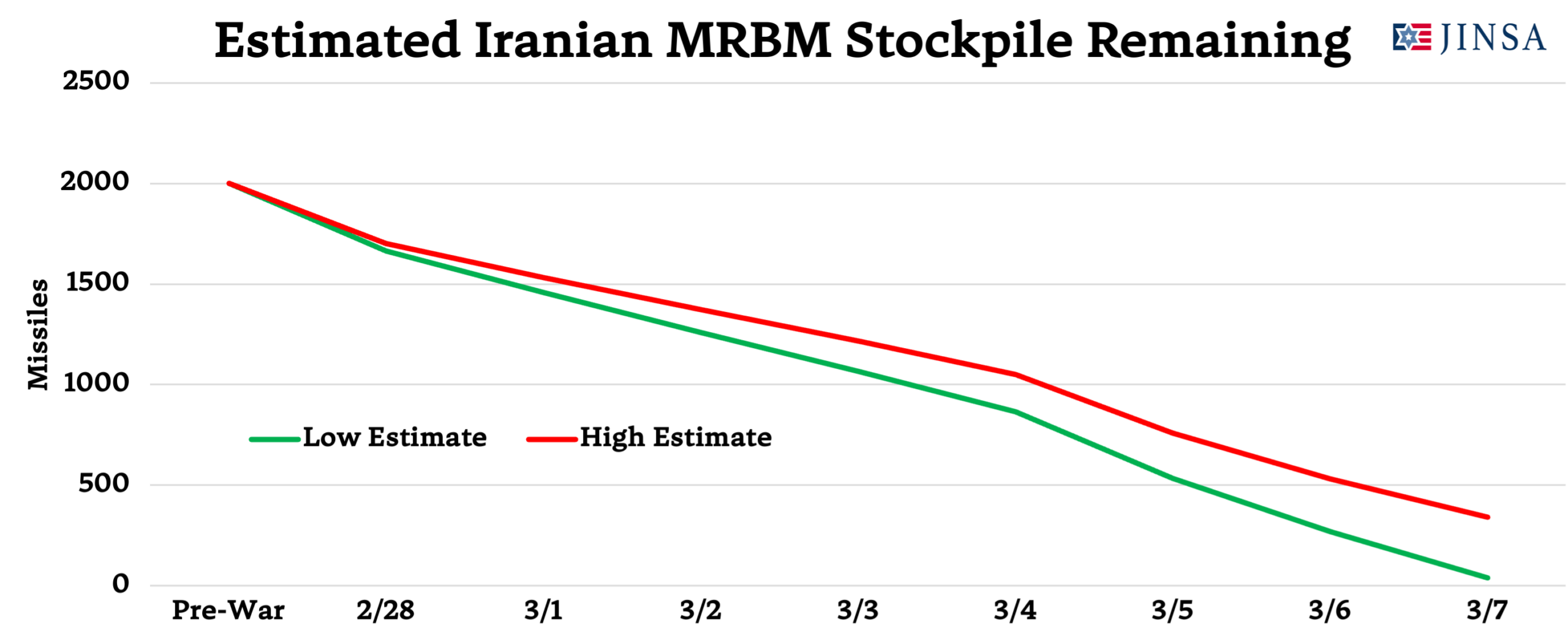
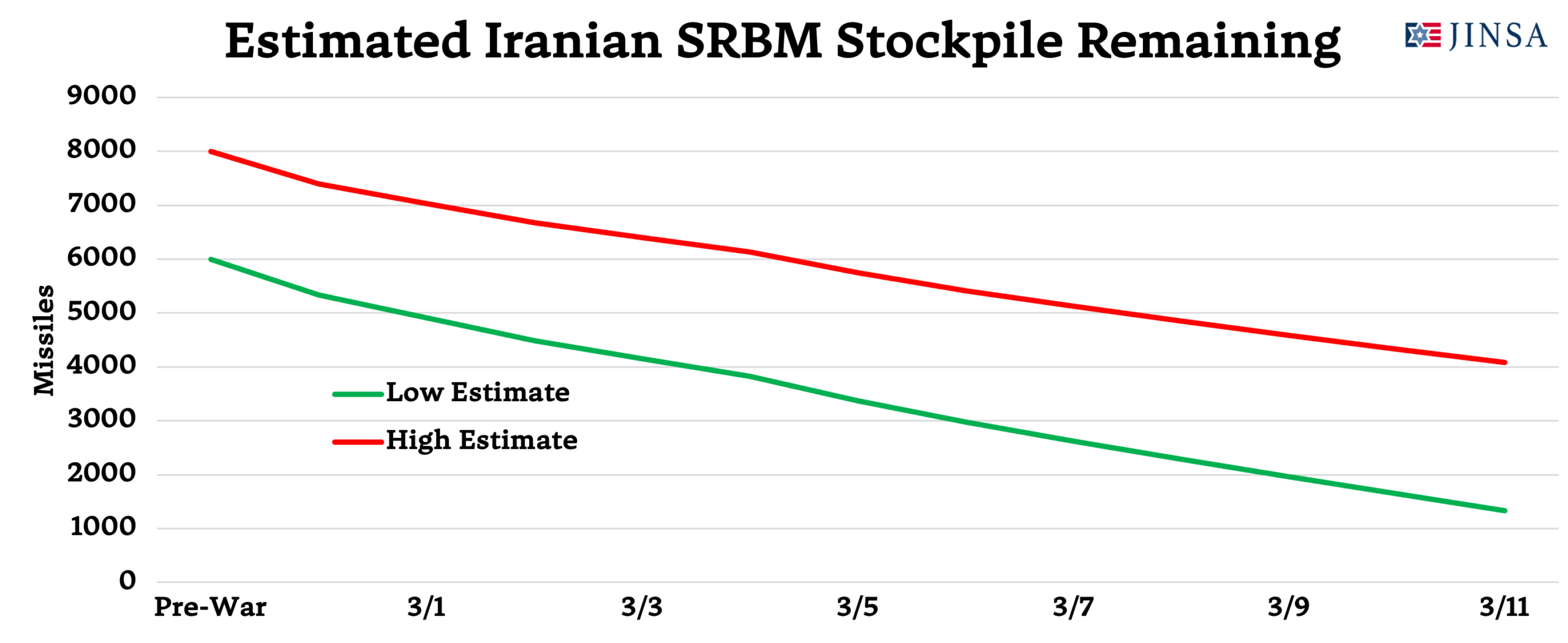
Iran entered the war with substantial ballistic missile stockpiles capable of reaching any location in the Middle East, but U.S. and Israeli strikes have destroyed large numbers of missiles and disrupted the infrastructure needed to prepare and launch what remains. Iran started the war with roughly 2,000 medium-range ballistic missiles (MRBM) and a short-range ballistic missile arsenal (SRBM) stockpile of 6,000 to 8,000 missiles, but SRBM losses may have accumulated faster due to robust U.S. operations to strike them. Even where inventory remains, strikes can disrupt the necessary deployment, preparation, and launching of missiles.
Iran’s medium-range ballistic missile (MRBM) losses harm it disproportionately because Iran started with fewer of these missiles and developed them for the narrower mission set of reaching Israel. Iran cannot substitute shorter-range missiles for this role, and it cannot freely fire whatever remains due to U.S. and Israel control over the skies in Iran. Even if Iran retains some MRBM capacity for a short period, the remaining stockpile will not support repeated days of high-tempo fire. Based on the current rate of Iran’s missile losses, it could lose its ability to fire these deadly weapons at Israel within the next few days to a week.
Iran’s short-range ballistic missile (SRBM) losses also cut into Iran’s ability to sustain missile fire on Gulf states. Even with a larger SRBM inventory than its MRBM stockpile, Iran still needs functioning logistics to move missiles from storage to launch sites, and ongoing strikes repeatedly disrupt that process.
Iranian Missile Fire Will Exhaust Soon
Iranian missile fire will likely keep decreasing as Iran loses missiles and launchers it cannot replace during the war. Iran has already moved from massed salvos to disparate launches with only one or a few missiles in each wave, and U.S. and Israeli operations will push daily fire continuously lower.
Iran may still generate occasional spikes against Israel, but it likely cannot repeat them at scale without accelerating launcher losses and shrinking follow-on capacity. Iran will likely rely on irregular launches rather than sustained salvos with many missiles. Even modest firing rates risk exhausting remaining launch capacity under continued counterstrikes, and any attempt to escalate would prove hard to repeat because it would further deplete the remaining launcher force.
Iran’s launcher losses similarly constrain its short-range missile fire. However, Tehran has deliberately prioritized targeting Gulf states with its remaining short-range missiles, aiming to destabilize the region and prompt Gulf nations to urge Washington to seek an end to the conflict. This strategic focus means that Iran will likely allocate more of its dwindling launch capacity toward attacks on Gulf targets as a lever to influence U.S. decision-making. Iran may be able to conduct limited attacks in the Gulf for short periods, but every day Iran launches gives U.S. and Israeli forces more chances to find and strike the remaining launcher fleet, which accelerates depletion. The overall trajectory points toward diminishing short-range missile fire, with only occasional surges possible.
Iran’s Limited Options
Iran’s rapidly shrinking number of missile launchers and continued U.S. and Israeli operations to hunt them will severely constrain Iran’s future options. Iran will likely pivot further from ballistic missile salvos and rely more on drones and proxy activity.
A Last-Ditch Barrage
Iran no longer possesses the launcher depth required to launch the type of coordinated ballistic missile barrages seen on February 28. However, if Iran fears that it will lose its missile capacity regardless of whether it fires or not, it could pursue larger attacks as a one-time gamble for regional disruption that drives an end to the war, but this would not create a sustainable campaign strategy.
Proxy Attacks
The regime will more likely rely on its network of proxies to target U.S. forces, Israel, and Gulf nations as its ballistic missile capabilities diminish. By activating multiple proxy fronts, Iran can maintain persistent threats while it preserves its dwindling missile arsenal and avoids further launcher losses. Hezbollah’s involvement in the current conflict signals this shift, as the group can attack Israel from the north, stretch Israeli defenses, and complicate response options. Iraqi militias aligned with Iran have also targeted Kurdish positions, aiming to deter Kurdish military operations. Iran will also likely encourage other proxies, such as the Houthis in Yemen, to join the conflict. The Houthis possess their own missile and drone capabilities, and their participation would further expand the geographic scope of the war, requiring defense from more directions, particularly for Gulf states and maritime targets.
Drone Operations
As ballistic missile launch capacity remains constrained, Iran will likely rely more heavily on drones since they do not consume the same scarce launcher inventory required for ballistic missile fire. Drones have already proven particularly challenging for Gulf defenses because of their low flight trajectories and shorter warning timelines. Iran will likely increase drone operations against energy infrastructure, ports, and military bases to create costs for the United States, Gulf nations, and global commerce, while conserving ballistic missile launchers. As it has done in the past, Iran will likely pair limited ballistic missile attacks with larger drone attacks, allowing the regime to maintain visible strike activity even as ballistic missile fire remains limited.