While the War Raged On: Repression in Iran
Click here to download the JINSA Insight
Even under fire, the Islamic Republic of Iran’s repressive organs have been busy jailing and executing their own citizens. The Iranian regime’s violent attempts to silence dissent and exploit civilians during Operations Epic Fury and Roaring Lion demonstrate what it fears most: its citizens’ strength and collective anger towards the government.
Just as it has in past moments of instability, Iranian security forces, including the Islamic Revolutionary Guard Corps (IRGC) and Basij paramilitary organization, conducted over 8,000 arrests and executed at least 39 political opponents and dissidents as it sought to prevent the Iranian people from monopolizing on the regime’s vulnerability and overthrowing the Islamic Republic. While also shutting down the internet to prevent citizens from organizing protests and exposing the government’s weaknesses and corruption, Iranian authorities recruited child soldiers and hid their weapons in residential areas to preserve the regime’s strength as strikes to the country’s air defenses and other military infrastructure severely weakened its ability to operate.
Although recent reports suggest that the U.S.-Iran ceasefire deal fails to address human rights concerns in Iran, the United States should not turn a blind eye either to the suffering the Islamic Republic has inflicted on Iranians or the power that lies in the regime’s fear of its own people. President Donald Trump promised Iranians, in January, that “help is on the way.” He should deliver that help now. The United States should apply sustained pressure on the Iranian regime for its human rights abuses, while supporting Iranians seeking freedom, including by helping Iranians safely bypass internet restrictions, and economically and militarily targeting repressive Iranian forces.
Repression as a Stabilization Tool
The Islamic Republic has always repressed its citizens to stabilize its regime but accelerates this repression when it feels most threatened. The regime’s egregious human rights abuses during the 2026 anti-government demonstrations captivated the Trump administration’s attention, with President Trump threatening on Truth Social on January 3, 2026, that “If Iran shots [sic] and violently kills peaceful protesters, which is their custom, the United States of America will come to their rescue.” After the regime murdered over 36,500 anti-government protesters and innocent bystanders in January 2026, President Trump once again promised to intervene on January 13, claiming that “help is on its way,” before eventually launching Operation Epic Fury alongside Israel’s Operation Roaring Lion. But even as U.S. and Israeli strikes pummeled Iran’s government and military, bringing with it the hope that Iranians would have a chance to seize their own destiny, the regime sought to silence dissent and reassert its dominance by carrying out arbitrary arrests, expediting executions, recruiting child soldiers, restricting internet access, and hiding under the cover of civilian infrastructure to conduct its military operations.
Arrests and Executions
Iran has a long history of arbitrarily arresting and executing political opponents, dissidents, and minorities without collecting substantial evidence for their alleged crimes, refusing to grant them proper trials, and holding them in abhorrent conditions where they are denied access to a lawyer or contact with their family to assert control over its people and reinforce the regime’s power. In times of political instability, particularly during wars and widespread protests, Iranian authorities arrest and execute people at an increased rate, oftentimes expediting suspects’ trials, or even refusing to have one at all, as a deterrence tactic aimed at preventing the population from overthrowing the government in its weakest moments. Oftentimes, the regime detains them on fabricated charges tied back to the country’s strict religious rules, such as “corruption on earth,” or “waging war against God,” which carry severe penalties under Iran’s theocracy. Other times, the regime arrests individuals and confiscates the belongings of anyone it suspects of sympathizing with Israel, often accusing them of “betraying the homeland.” Ultimately, Iran’s government maintains the authority to punish anyone who disagrees with the regime or fails to perfectly adhere to Sharia law.
The pattern of mass arrests, detentions, and executions has played out repeatedly, whenever Iranians have taken to the streets to demand better of their government. In November 2019, Iranian authorities arrested and murdered thousands of people during protests over fuel prices and regime corruption. Similarly, during the 2022 “Women, Life, Freedom,” movement in which tens of thousands of protesters condemned the Morality Police’s brutal murder of 22-year-old Kurdish woman, Mahsa Amini, for failing to wear her hijab properly, and the regime’s overall repressive laws towards women, security forces accelerated arresting and executing protesters. This pattern continued during and immediately following the 12-Day War in 2025 and in early 2026 when security forces once again responded to internal unrest with violent arrests, shooting protesters and innocent bystanders in the streets, and executing people on bogus charges without evidence or proper trials as protests mounted over the country’s economic crisis and government resource mismanagement.
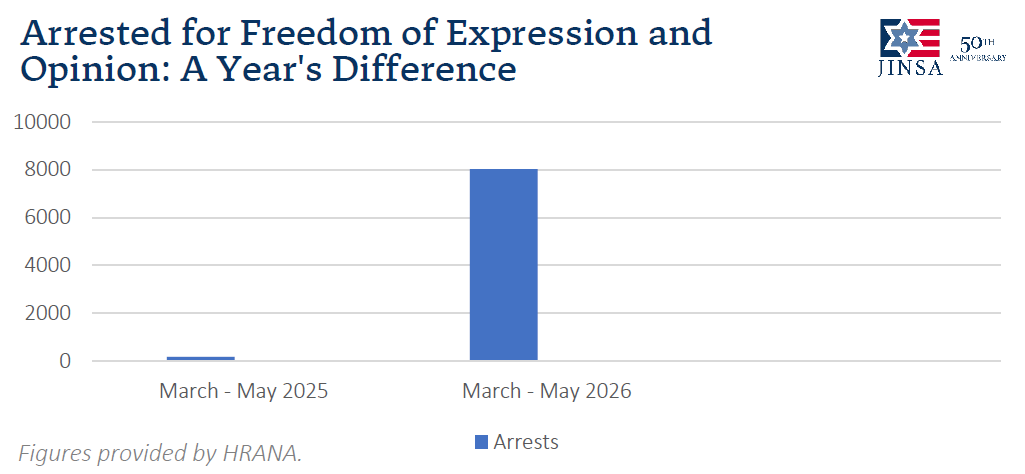
Similarly, after the United States and Israel launched Operations Epic Fury and Roaring Lion, Iran arrested and executed the regime’s political opponents and protesters to prevent renewed demonstrations from overthrowing the government. While finding an accurate number from the regime is hard to come by, Iranian police chief Ahmadreza Radan, known for his brutal crackdown of protesters throughout the Middle East, stated that security forces have arrested over 6,500 Iranians since the war commenced on suspicion of espionage and betraying the regime. However, initial reports from the Human Rights Activists News Agency (HRANA) suggest Iranian authorities detained, at a minimum, over 8,000 people simply for expressing their opinions, between early March and the end of May. In an indication of how forcefully the regime is going after possible opponents, these numbers represent an almost 4,500 percent increase in arrests from the same period last year—in March, April, and May of 2025, there were only 175 expression-related arrests total.
Furthermore, Iranian authorities also detained several religious minorities during the war, such as Zoroastrians and members of the Baha’i faith, the latter of which the Iranian government does not recognize as a legitimate religion and has accused many of its members of spying for Israel. Refusing to stop at just arbitrary arrests, the regime also executed around 40 people, including 15 protesters, 10 alleged spies, nine political dissidents, and four others on charges of waging “armed rebellion against the state,” according to Amnesty International.
But even 8,000 detentions fail to capture the true number of Iranians arrested during the 2026 war. HRANA initially reported that during the 12-Day War, between June 13–24 2025, Iranian authorities detained 301 people for expressing their views or sharing their beliefs online regarding the conflict. However, HRANA later confirmed through an email exchange that in June 2025 alone, the regime arrested over 22,000 people on charges related to freedom of expression and opinion. Comparably, HRANA initially reported that during the current U.S.-Israel-Iran conflict, Iranian authorities detained over 8,000 people in March, April, and May of 2026 for expressing their beliefs. If, as was the case during the 2025 war, this initial number proves to be an undercount—which it almost certainly is, given Iran’s internet blackout and the difficulty of getting accurate information—then it is likely that the true extent of the regime’s crackdown will number in the tens of thousands of arrests.
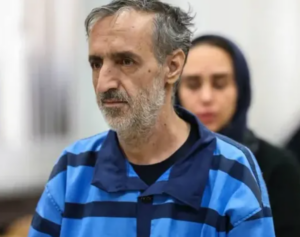
Mohammad Abbasi, who withstood torture and intense interrogations without access to a lawyer, was executed on May 13 for protesting the Iranian government in January (Iran International).
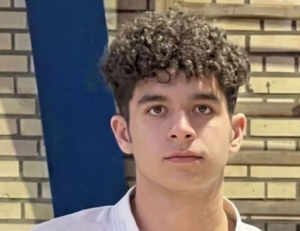
Iranian authorities detained 21-year-old Sasan Azadvar for protesting the regime in January 2026 and later executed him on April 30 (Iran International).
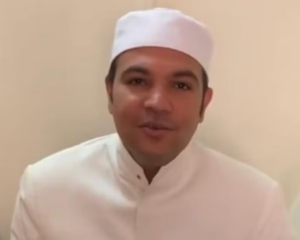
Zoroastrian religious figure, Hooman Forouhari, was arrested by IRGC intelligence forces on March 14 on unknown charges (Iran International).
Rallies, Patrols, and Checkpoints
In addition to its brutal crackdowns, armed Iranian forces established checkpoints, formed security patrols, and held several nighttime pro-regime rallies to intimidate civilians and prevent mass demonstrations. Addressing the checkpoints, one Tehran resident told Iran International that “It feels like they are looking for any small excuse to harass people or even arrest them.” Another person noted that with the rallies, “There is a clear pattern in how these actions are carried out at night,” saying the demonstrations are aimed at “creating fear and preventing any form of protest.”
These night patrols and checkpoint guards are not just a show of force; they are prepared to use it as well. In one instance, forces fired at people in their homes, chanting in support of exiled Iranian Crown Prince Reza Pahlavi, who became a significant rallying figure during the January uprising. Indicating the regime’s vulnerability to popular opposition, Iran’s police chief Ahmadreza Radan stated on March 9 that “if someone comes to the streets at the enemy’s behest, we do not see them as a protester—we see them as an enemy, and we will deal with them accordingly,” adding “all our forces have their fingers on the trigger and are ready.” Additionally, the IRGC threatened protesters during the war on March 13 that “those we call the ‘Neo-ISIS’ elements’ should know that a blow even harsher than that of January 8 awaits them,” referring to the devastating night in which regime forces murdered tens of thousands of people for protesting government corruption in early 2026.
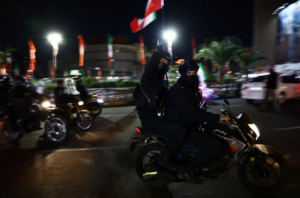
Security forces present during a pro-Islamic Republic rally in Tehran on March 17, 2026 (Iran International).
Child Soldier Recruitment
In times of domestic unrest, Iran turns to the country’s children to help the regime fight its battles as it seeks to bolster its forces and replace those killed during war and internal conflict. Notably, in 2022, the Iranian security forces reportedly exploited children, deploying them to patrol the streets and suppress crowds during the “Women, Life, Freedom” movement as the crowds grew too large for police to control alone, posing what security assessed as a legitimate threat to the regime’s power.
As the U.S. and Israeli militaries eliminated several IRGC and Basij commanders and members during the recent fighting, Iranian forces recruited children in an attempt to restore military strength and control the population. On March 26, Rahim Nadali, a cultural deputy for the IRGC’s Mohammad Rasoulollah Corps in Tehran, announced the Guard’s “Defenders of the Homeland Fighters for Iran” campaign, calling on children as young as 12 years old to assist with operations and logistics and to patrol checkpoints. However, days before the campaign commenced, the Basij Teachers Organization claimed that 11-year-old Alireza Jafari was “on duty” with his father due to personnel shortages, according to his mother, at a Basij checkpoint in Tehran that was struck on March 11, killing them both.
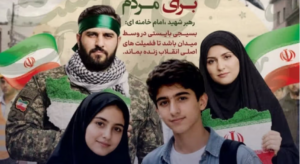
Basij recruitment poster featuring children and adults, calling on Iranian citizens to inquire at their local mosque to join the paramilitary organization (Iran International).
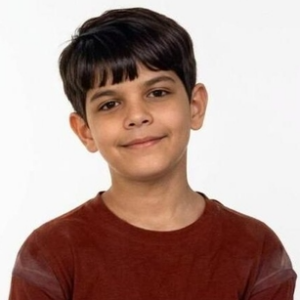
11-year-old Alireza Jafari was killed in an airstrike on a Basij Checkpoint on March 11, 2026 (Iran International).
Internet Blackout
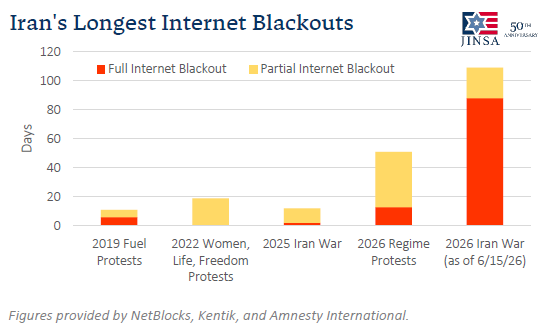
To prevent Iranians from organizing protests and to conceal the government’s own human rights violations and massacres, Iran shuts down its citizens’ internet access during times of internal instability and when it faces severe external pressure. Previously, the regime blocked the internet during the November 2019 demonstrations condemning rising fuel prices, in the fall of 2022 during the “Women, Life, Freedom” protests, and in June 2025 following U.S. and Israeli strikes on Iran’s nuclear and military facilities. Notably, as protests against the government mounted, the regime cut internet access again nationwide on January 8, 2026, to conceal its massacre as security forces killed an estimated 36,500 protesters that night and the following evening.
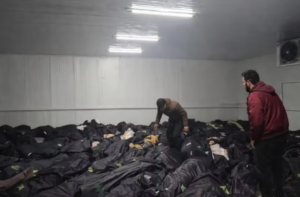
Iranian protesters murdered by regime forces during the January 2026 demonstrations, immediately following the government-imposed internet shutdown, lie in body bags (Iran International).
Mirroring its past internet blackouts to prevent citizens from protesting and exposing the regime’s human rights abuses, the Iranian government shut down the country’s internet access during the 2026 war for 88 days. Costing the country $35 million a day in revenue losses from the shuttering of online businesses, the blackout became the longest government-imposed nationwide internet shutdown in history. Iranian Foreign Minister Abbas Araghchi justified the shutdown, as Iranian officials often do during blackouts, saying the regime seeks to “protect the people during wartime.” But even as the ceasefire held, Iran did not partially let up its blockade until May 26, except continuing to roll out its “Internet Pro” program, a limited and expensive tiered internet access platform for verified businesses and scholars the regime does not deem a threat to its power to offset economic losses from the outage.
However, Iran further weaponized its citizens’ internet connectivity by only allowing access to those who pledge to promote the regime. According to people who spoke with Iran International in mid-May, some Iranian citizens received messages from unknown sources telling them they could eventually regain internet access if they publish pro-regime propaganda on social media, upload photographic proof of their posts, and sign a pledge not to post statements critical of the regime in the future, demonstrating the regime’s insecurity from popular social media messaging.
To bypass these restrictions for organizing protests and drawing attention to the regime’s corruption, Iranians have attempted to connect to the internet covertly through accessing Virtual Private Networks (VPNs) or purchasing Starlink satellite terminals on the black market. However, bypassing these restrictions comes with great risk. In February 2024, the Iranian government criminalized the use of unauthorized VPNs and subsequently cracked down on those found violating this ruling, particularly during the January 2026 protests. Additionally, because Starlink dishes are large and easy to identify from the street, security forces were able to raid homes using them and seize these terminals both before and during the war, oftentimes accusing the users of being foreign agents.
Exploitation of Civilian Infrastructure
Lastly, to avoid coming under fire, Iranian security forces oftentimes operate from civilian infrastructure, including parks, schools, and sports stadiums, or in close proximity to these facilities. Notably, on March 31, Iran International exposed an IRGC manual instructing fighters to conceal weapons in, and carry out attacks from, civilian sites, which can prevent U.S. and Israeli forces from targeting those facilities, knowing it could endanger civilian lives. However, this strategic cover not only protects Iranian forces from attacks. Iran’s military and police purposely operate among and behind civilian infrastructure for propaganda purposes to criticize U.S. and Israeli forces if they ultimately choose to strike Iranian military positions, just as Hamas and Hezbollah do in Gaza and Lebanon.
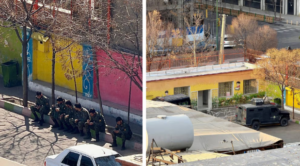
IRGC forces and a military vehicle stationed at an elementary school in Tehran in early March (Iran International).
Recommendations
Before launching Operation Epic Fury on February 28, the Trump administration repeatedly conveyed its determination to protect Iran’s civilians. The United States has the unique opportunity, as it continues talks with Iran’s government and maintains a significant military presence in the Middle East, to wield its leverage over the regime and secure a freer and safer future for the Iranian people.
Secure Human Rights Guarantees
Before the war, the Trump administration repeatedly condemned the Iranian government’s planned executions of protesters and political opponents, with Vice President J.D. Vance noting that delegations were discussing the violence against Iranian protesters in the February 2026 negotiations. However, since the war broke out, negotiations have centered around Iran’s control of the Strait of Hormuz and the regime’s nuclear program, failing to adequately address Iran’s treatment of its civilian population.
Entering a deal with Iran’s government legitimizes its authoritarian regime, directly threatening the lives and rights of Iranian citizens. At a bare minimum as part of ensuing talks, the United States should demand that the regime adhere to international humanitarian law, including granting protections for protesters and minorities; the immediate release all detained protesters, political opponents, and minorities arrested without legitimate reason; halt all planned executions; fully restore internet access across the country; and set an age minimum for its security forces to 18 years and older.
If the regime fails to adequately adhere to these demands and the ceasefire collapses, the United States should resort to striking Ministry of Intelligence buildings and judiciary facilities, particularly those most documented for violating human rights, as well as facilities linked to recruiting child soldiers, to pressure the regime into scaling back on its repressive activities.
Target Individual Leaders
To deter the regime from further repressing its people and make them fearful enough to concede to U.S. demands to obey the rights of Iranian citizens, the U.S. government should also launch a campaign aimed at revealing the identities and locations of senior IRGC and Basij leaders, particularly those appointed to new positions since the war began, to the Iranian public and international community. In addition to exposing their identities, the United States should wield its economic power over the Iranian government by sanctioning those new IRGC and Basij commanders individually and encourage its allies to do the same, to further pressure the Iranian government into relaxing its control over its citizens.
Expand VPN Access
While the United States works to secure human rights guarantees for Iranian citizens, the United States should expand Iranians’ access to more secure VPNs to prevent the government’s weaponization of internet connectivity in future moments of unrest, allowing Iranians to organize protests and further expose the regime’s weaknesses and oppression in real time. Furthermore, the government should call on Starlink to design and produce smaller terminals, making it easier for people to smuggle them into Iran and conceal them from security forces.