Watch Webinar – Erdogan’s Turkey: NATO Host or Hazard?
Click here to read transcript.
At the NATO summit in Ankara on July 7–8—the alliance’s first summit hosted by Turkey since 2004—Turkish President Recep Tayyip Erdoğan pressed his case as an indispensable partner, and President Donald Trump delivered. On the summit’s opening day, President Trump announced he would lift U.S. CAATSA sanctions imposed on Turkey after its 2019 acquisition of Russia’s S-400 missile defense system, and indicated he would move toward readmitting Ankara to the F-35 program.
Now, reports suggest Turkey may transfer the S-400s to the United Arab Emirates—a move that, if confirmed, would represent Ankara’s attempt to clear the remaining legal obstacle to F-35 program access. The announcement came after the Trump administration had notified Congress in June of its intention to sell Turkey more than $700 million in F110 jet engines for its KAAN fighter program, drawing bipartisan objections from lawmakers and Israeli Prime Minister Benjamin Netanyahu.
The accommodations, however, risk rewarding behavior that NATO should be deterring. Turkey retains the S-400, has threatened allies Greece and Cyprus through expansive maritime claims, maintained ties with Hamas, and is now exploring a Turkish-led Sunni security framework outside NATO’s orbit. Erdoğan has also overseen a sweeping crackdown on Turkey‘s domestic opposition—behavior that sits uneasily with NATO’s foundational commitment to democracy, individual liberty, and the rule of law. The central question coming out of Ankara is whether President Trump’s personal rapport with Erdoğan has overridden allied concerns—and what the summit’s outcomes mean for the alliance’s coherence and credibility.
To assess the outcomes of the recent NATO summit in Ankara and their implications for U.S.-Turkey relations and alliance cohesion, JINSA hosted a webinar featuring Alan Makovsky, member of JINSA’s Benjamin Gettler Project for East Med Security, and Svante Cornell, JINSA Scholar and Director of the Central Asia-Caucasus Institute & Silk Road Studies Program.
Blaise Misztal, JINSA’s Vice President for Policy, moderated the discussion.

Svante E. Cornell Svante E. Cornell is a JINSA Scholar, the Director of the American Foreign Policy Council’s Central Asia-Caucasus Institute, and a co-founder of the Institute for Security and Development Policy, Stockholm. His main areas of expertise are security issues, state-building, and transnational crime in Southwest and Central Asia, with a specific focus on the Caucasus and Turkey. He is the Editor of CACI’s Central Asia-Caucasus Analyst and Turkey Analyst, the Center’s electronic publications, and of its Silk Road Papers series of occasional papers. |
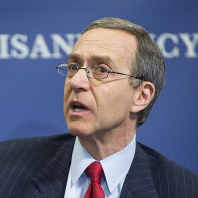
Alan Makovsky Alan Makovsky is a senior fellow for National Security and International Policy at the Center for American Progress. From 2001 to 2013, he served as a senior professional staff member on the Committee on Foreign Affairs in the U.S. House of Representatives, where he covered the Middle East, Turkey, and other related issues. At the State Department, from 1983 to 1994, Makovsky variously covered southern European affairs and Middle Eastern affairs for the Bureau of Intelligence and Research. |
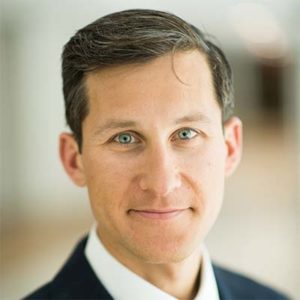
Blaise Misztal Blaise Misztal is the Vice President for Policy at JINSA. Misztal previously was a Fellow at the Hudson Institute, and has held roles as the Executive Director of the Task Force on Extremism in Fragile States and Director of the National Security Program at the Bipartisan Policy Center. |