Webinar – The Fog of Ceasefire: Escalation and the Uncertainty Ahead
Click here to read a transcript.
Ceasefire agreements have not pacified the Iranian regime and its proxy Hezbollah. Since the temporary Lebanon ceasefire began less than 50 days ago, Hezbollah has launched over 1,100 drones and rockets — including several attacks following President Donald Trump’s June 1 claim that Hezbollah had pledged to “not attack Israel.” In recent days, the Iranian regime has attacked Bahrain, Iraq, Kuwait, and ships in international waters. Diplomatic progress is also in doubt, with Iranian state media giving conflicting reports about the regime’s willingness to continue talks.
In addition, Iran has linked the two fronts at the negotiating table, further complicating matters. Following Tehran’s insistence that Israeli operations against Hezbollah were impeding a deal, President Trump berated Israeli Prime Minister Benjamin Netanyahu in a tense June 1 call. Then, on June 3, Israel agreed to a full ceasefire with Lebanon and committed to withdraw its forces from certain geographic zones. However, there is no guarantee that Israel’s conditions for upholding the ceasefire—Lebanese forces filling the vacuum and Hezbollah halting its attacks—will be met.
To discuss the latest developments and the potential path forward, JINSA hosted a webinar featuring JINSA Distinguished Fellow IDF MG (ret.) Yaakov Amidror, former National Security Advisor to Israel’s Prime Minister.
Blaise Misztal, JINSA’s Vice President for Policy, moderated the discussion.
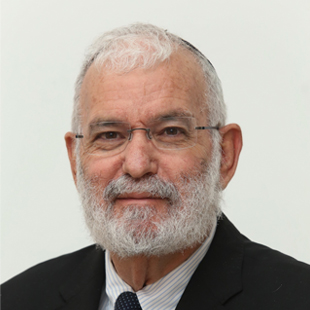
IDF MG (ret.) Yaakov Amidror IDF MG (ret.) Yaakov Amidror is a Distinguished Fellow at JINSA. Prior to joining JINSA, MG Amidror was the National Security Advisor to the Prime Minister of Israel, as well as the head of Israel’s National Security Council. MG (ret.) Amidror also has served as Director of Israel’s Intelligence Analysis Division. |
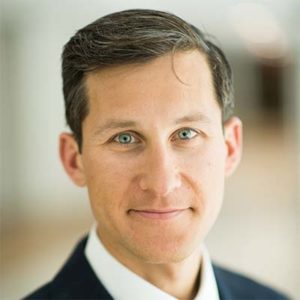
Blaise Misztal Blaise Misztal is the Vice President for Policy at JINSA. Misztal previously was a Fellow at the Hudson Institute, and has held roles as the Executive Director of the Task Force on Extremism in Fragile States and Director of the National Security Program at the Bipartisan Policy Center. |